Lore:Atmora
| Atmora | |
|---|---|
| Type | Continent |
| Continent | Atmora |
| Demonym(s) | Atmoran, Altmoran |
Atmora, or Altmora in Aldmeris, (meaning "Elder Wood"),[1][2][3] and referred to as "the land of truth" by Atmorans,[4] is a continent north of Tamriel, where tradition has it the first humans came from in ancient days.[5][6] It is the ancestral land for all humans,[7]:155 including the Nedic peoples,[3] the ancestors of the Cyrodilians, Bretons, and Nords.[8]
History[edit]
What little is known of Atmora is derived mainly from ancient myths. The Anuad creation myth from the Mythic Era claims the land of Atmora was once part of Old Ehlnofey (which later became Tamriel), and became a separate continent as a result of a war between the Wandering and Old Ehlnofey that reshaped the face of Nirn, with the Wandering of Atmora becoming the Nords.[9] According to Nordic beliefs, after men were formed on the Throat of the World when the sky breathed onto the land, they crossed the seas north to Atmora.[10] A more modern creation myth speculates that after Lorkhan created Men, they chased the Aldmer out of Altmora and he shattered the land into many.[2] Atmoran myths hold that the Nords were lead by Shor, Stuhn, and Tsun to victory over their Aldmeri oppressors time and again. The Altmeri faith teaches that Auri-El led the original Aldmer against the armies of Lorkhan in mythic times, vanquishing him and establishing the first elven kingdoms of the Altmer, Altmora and Old Ehlnofey.[11]

Regardless of their origins, it was a not a single invasion that the first humans came to Tamriel from Atmora, but a series of them over hundreds of years, creating many different Nedic cultures, the new-arrived Atmorans always clashing with the generations that had already established themselves.[6] For centuries, Tamriel had served as a "safety valve" for Atmorans who, for whatever reason, could not stay in Atmora. In the late Merethic Era, while civil war raged in Atmora, a fleet of Atmorans migrated and settled in northern Tamriel. Among them were Ysgramor and his two sons, Yngol and Ylgar.[8][3]

Not long after founding the city of Saarthal, the Atmoran settlers were massacred by the Snow Elves in what became known as the Night of Tears.[3] Ysgramor and his sons escaped and fled back to Atmora, where they assembled the Five Hundred Companions to seek vengeance upon the elves.[3][10] The massive shipyards of the Atmoran port of Jylkurfyk were commissioned to build a fleet that would carry the Companions across the Sea of Ghosts.[12] When Ysgramor and his Companions finally landed at Hsaarik Head on Tamriel's northern coast, they drove the elves from northern Tamriel and then went on to defeat them on the island of Solstheim.[13] The territory the Companions conquered formed the precursor of modern-day Skyrim.
Under the reign of Ysgramor's descendant High King Harald in the second and third centuries of the First Era, Skyrim was consolidated as an independent kingdom. Harald relinquished all of his holdings in Atmora, and Atmoran mercenaries left Skyrim and purportedly returned to their homeland.[8][10] Atmorans would continue to travel to Skyrim over the following centuries, notably including Ysmir Wulfharth, but in declining numbers.[14][15] The last Atmoran "invasion" of Tamriel was recorded in 1E 68, when two Atmoran ships laden with corpses begged to make port in Tamriel.[16] The last purported emigrant from Atmora known to history is Tiber Septim in the ninth century of the Second Era; legends relate that he sailed to Skyrim and spent his youth among the Nords.[17][18]
It was around the time of Ysgramor's migration that Atmora began to undergo an inexplicable shift in climate, the harbinger of the continent's demise.[19] Once known as a green, albeit colder land, Atmora was gradually overcome by "the frost fall" and rendered largely uninhabitable,[10][16] becoming a "frozen continent".[20] There is some suggestion that, as of the early Third Era, Atmora was still inhabited,[21] but expeditions there in the mid- to late-Third Era only found a place of permanent winter with little life and no sign of human habitation. It is believed that Atmora no longer supports any civilized life, and those people who did not leave it for Tamriel ultimately succumbed to the ever-worsening climate.[16] The freezing gales coming from Atmora could be felt as far as Skyrim.[22]
Society[edit]

Early Nordic society is reflective of Atmoran society. Many Nordic customs were inherited from Atmora, and the continent's culture has been highly influential on Tamriel.[16] Atmorans were a sea-faring people, though they purportedly had no knowledge of agriculture and survived off of hunting. The Atmorans were purportedly engaged in ceaseless warfare.[8][16][23] Atmorans were also a pre-literate society and lacked a formal writing system of their own; Ysgramor is credited with developing a runic transcription of Nord speech based on Elvish principles, and is consequently considered the first human historian.[3] While Atmorans were considered one race, it is implied that there were regionally-distinct racial groups, such as the "sinewy long folk" whose "ruddy skin matched the dawn" that inhabited the eastern edge of Atmora.[24]
Atmoran settlers of Tamriel brought with them traditions such as naming ceremonies and their religion of animal worship.[12][25][26] They deified the hawk, wolf, snake, moth, owl, whale, bear, and fox, but preeminent among all animals were the dragons.[26] At the height of the Dragon Cult's influence, before the Dragon War, the dragon priests held as much power as kings, ruling in the stead of the aloof dragons they worshipped. In Atmora, the priests demanded tribute and set down laws and codes of living that kept peace between dragons and men. In Tamriel, however, they reigned as tyrants and made virtual slaves of the rest of the population.[26] Atmorans also passed down myths involving demons, especially Herma-Mora, "the Woodland Man", who would become a part of the Nordic pantheon.[11]
-
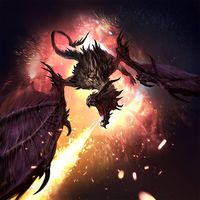
Alduin, chief deity of the Dragon Cult
-
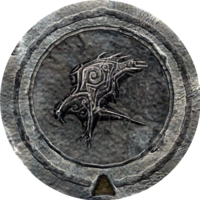
Ancient Nordic totem depicting the Hawk
-
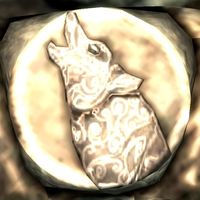
Ancient Nordic totem depicting the Wolf
-
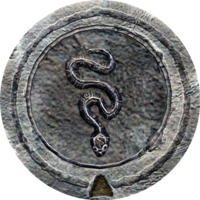
Ancient Nordic totem depicting the Snake
-
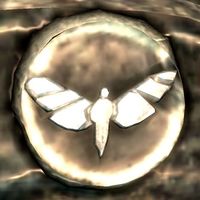
Ancient Nordic totem depicting the Moth
-
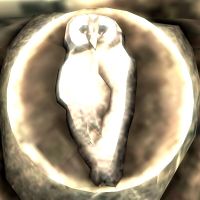
Ancient Nordic totem depicting the Owl
-
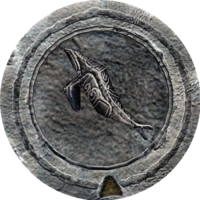
Ancient Nordic totem depicting the Whale
-
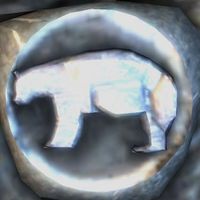
Ancient Nordic totem depicting the Bear
-
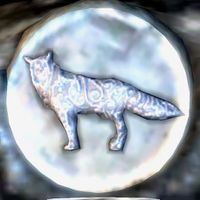
Ancient Nordic totem depicting the Fox
-
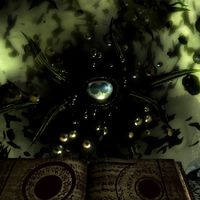
Herma-Mora, the Woodland Man
-
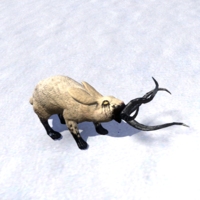
Hare associated with Herma-Mora


Geography[edit]
Though a cold continent, Atmora had marshes in the east[27] and forests with running streams.[28]
Notable Places[edit]

- Atmoran Frostwood
- A forest where much game was hunted by Ysgramor.[28]
- Atmoran Strait
- A body of water in the Sea of Ghosts, where Yngol and the crew of the Harakk drowned in the Storm of Separation.[29][30]
- Forelgrim
- The native home of the White Stag.[28]
- Jylkurfyk
- The largest port on the continent.
- Shivering Glacier
- In myths it was here that Shor carved a record of his victory over Sneggh and was where Ysgramor wrestled down a Chub Loon.[28][31]
Fauna[edit]
Giants are suggested to have also originated from Atmora,[32] supported by when Ysgramor met Giant-Wives there[28] as well as tales of ancient giants and Atmoran titans.[33] The animals that provided the basis for Atmoran talismans, such as bears, wolves, owls, moths, hawks, whales, and snakes, are believed to have lived on the continent. Deer, hares and foxes also lived there.[28] The Chub Loon is theorized to be native to Atmora. According to Nord myth, Atmoran Chub Loons were much larger, standing as tall as two warriors and with a squawk that could start avalanches. Modern Atmoran Chub Loons are much more diminutive in size, comparable to their Tamrielic brethren, but with distinct white plumage and a blue beak.[31] Atmoran Bantam Guar are fur-less, cold-blooded reptiles with icy blue eyes suspected to be from there, though this is considered dubious at best.[34] According to Nord legend, bears originated on the continent of Atmora, leading some to suspect that the Psijic monks went there to find the original model of their Psijic Bear Exemplar.[20] The fiercely noble Atmoran Snow Bears have friendly demeanors while they are young,[35] and are said to have been brought from Atmora by Ysgramor himself, who deemed them the "only worthy avatars" of the ancient Nord Bear totem.[36]
-
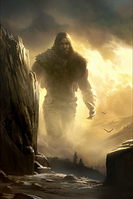
Ancient giant
-
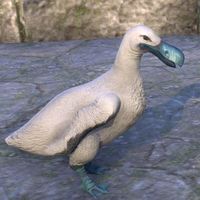
Atmoran Chub Loon
-
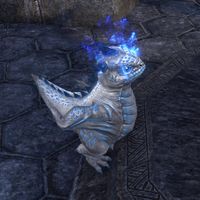
Atmoran Bantam Guar
-
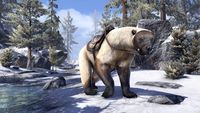
Atmoran Snow Bear
-
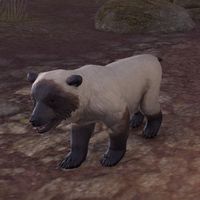
Atmoran Snow Bear cub
-
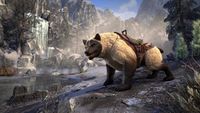
Atmoran Snow Ursauk


Gallery[edit]
-
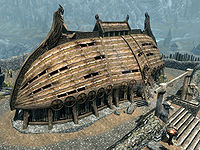
Jorrvaskr, originally built in Jylkurfyk
-
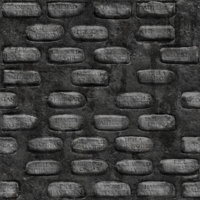
The names of many original Companions etched into bricks
-
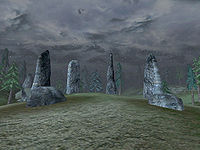
Atmoran stone pillars on Solstheim
-
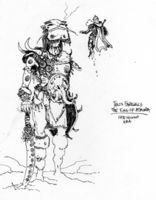
Talos and the King of Atmora


Notes[edit]
- In the 36 Lessons of Vivec, Sermon 17, Vivec wrote that he and Nerevar journeyed to Elder Wood, where they "found nothing but frozen bearded kings".
See Also[edit]
- Atmoran Names
- For a list of notable Atmoran, see here.
References[edit]
- ^ Mysterious Akavir
- ^ a b The Monomyth
- ^ a b c d e f Before the Ages of Man — Aicantar of Shimerene
- ^ Notes on Yngol Barrow
- ^ Pocket Guide to the Empire, 1st Edition: Prologue — Imperial Geographical Society, 2E 864
- ^ a b Pocket Guide to the Empire, 3rd Edition: The Throat of the World: Skyrim — Imperial Geographical Society, 3E 432
- ^ The Elder Scrolls V: Skyrim: Prima Official Game Guide — David Hodgson
- ^ a b c d Frontier, Conquest — University of Gwylim Press, 3E 344
- ^ The Annotated Anuad
- ^ a b c d Pocket Guide to the Empire, 1st Edition: Skyrim — Imperial Geographical Society, 2E 864
- ^ a b Varieties of Faith... — Brother Mikhael Karkuxor of the Imperial College
- ^ a b Songs of the Return, Vol 2
- ^ Fall of the Snow Prince — Lokheim
- ^ Five Songs of King Wulfharth
- ^ Rislav The Righteous — Sinjin
- ^ a b c d e Pocket Guide to the Empire, 3rd Edition: Other Lands — Imperial Geographical Society, 3E 432
- ^ Pocket Guide to the Empire, 1st Edition: Cyrodiil — Imperial Geographical Society, 2E 864
- ^ The Arcturian Heresy — The Underking, Ysmir Kingmaker
- ^ Songs of the Return, Vol 7
- ^ a b Psijic Bear Exemplar mount description in ESO
- ^ The Wolf Queen, v4 — Waughin Jarth
- ^ Snowy Sabre Cat mount description in ESO
- ^ Songs of the Return, Vol 19
- ^ Songs of the Return, vol 24
- ^ The Hope of the Redoran — Turiul Nirith
- ^ a b c The Dragon War — Torhal Bjorik
- ^ The Onus of the Oghma — Phrastus of Elinhir
- ^ a b c d e f Fragmentae Abyssum Hermaeus Morus
- ^ Broken Statue plaque description
- ^ Songs of the Return, Volume 5
- ^ a b Atmoran Chub Loon pet description in ESO
- ^ Giants: A Discourse — Kord the Curious
- ^ Letter to Thane Ogvar — Thunvilde
- ^ Atmoran Bantam Guar pet description in ESO
- ^ Atmoran Snow Bear Cub pet description in ESO
- ^ Atmoran Snow Bear mount description in ESO
|
||||||||||||||||||||
![[Content is available under Attribution-ShareAlike]](http://en.uesp.net/w/images/4/4d/Somerights.png)
